
Expanded Definition of “Plastic Import”
Under the Plastic Waste Management (Amendment) Rules 2024, CBIC’s updated guidelines redefine the scope of regulated materials. Now included are:
– Plastic packaging
– Carry bags
– Sheets, resins, pellets
– Films and preforms
This means importers of everything from raw plastic resins to semi-finished forms are covered.
What This Means at Customs
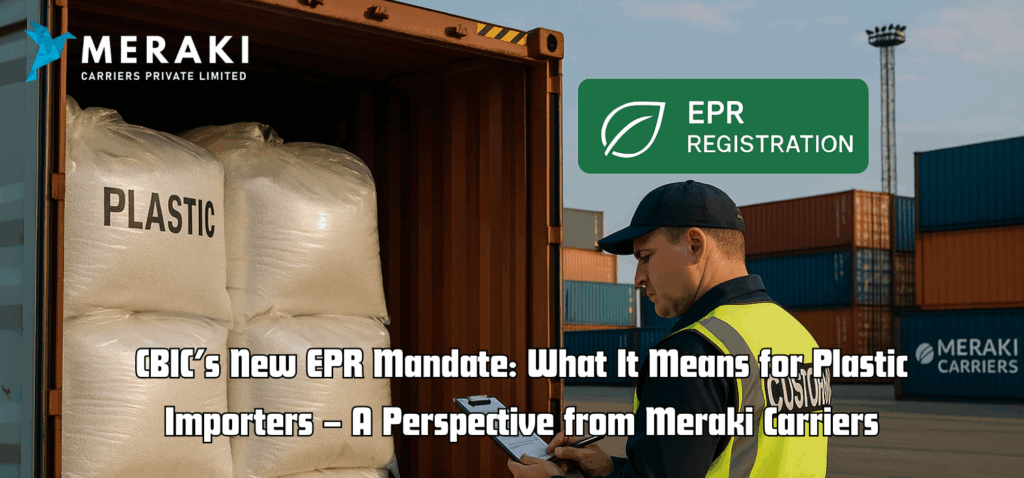
Customs officers at ports, airports, and land borders are now required to verify proof of EPR registration before releasing any plastic-import consignment. Shipments lacking registration will be halted at the clearance stage.
Why This Matters for the Supply Chain
– Enhanced accountability: The measure promotes traceability as all plastic entering the country now falls under pollution-control standards.
– Brand responsibility: It transfers environmental accountability back to producers and importers — they are now financially and operationally responsible for managing the waste their products generate.
– Supply chain alignment: Shipping partners, warehouses, and logistics providers must adapt to ensure startups and established brands alike are compliant.
Meraki Carriers’ Commitment to Compliance
At Meraki Carriers, we understand the complexities this EPR mandate introduces. To support clients seamlessly adapting to these changes, we’re:
1. Offering EPR verification checks as part of our pre-shipment documentation services.
2. Partnering with EPR portal experts to assist clients in registering and maintaining compliance.
3. Training warehouse and customs teams to identify shipments that require EPR documentation—eliminating delays and preventing non-compliant consignments.
How You Can Prepare Before Issues Hit
1. Create your EPR account on the Centralized Plastic Portal.
2. Register all material types you import: resins, films, preforms, sheets, bags, etc.
3. Integrate EPR info into your Bill of Entry and shipping manifests.
4. Brief your logistics partners—including Meraki—to flag and prioritize EPR compliance.
5. Stay proactive: Watch for CBIC communications and regularly review your EPR standing.
Why This Matters for You
If you’re importing plastic packaging or raw materials—whether in discrete batches or high-volume streams—non-compliance carries real consequences:
– Customs clearance delays: Without EPR credentials, your shipments will be held.
– Financial penalties: Unregistered activity may lead to penalty notices or fines.
– Brand risks: Repeated infringements can affect market reputation and growth.
Our commitment at Meraki Carriers is unwavering: we partner with you to simplify documentation, facilitate timely customs release, and manage full traceability—so you can focus on business growth, not regulatory hurdles.
Take the Next Steps
If you import any form of plastic or plastic packaging:
– Talk with your EPR registration provider.
– Reach out to Meraki Carriers for a free compliance audit on your import documentation.
– Reach out today: info@merakicarriers.in or +91‑81220 37781
Let Meraki Carriers be your compliance compass—ensuring your goods move swiftly across borders and into market, without disruption.
Meraki Carriers – Shipping with passion, delivering with purpose.